


 Reviews
 Login
Login
Did you know a house mouse can slip into your living room through a gap no larger than a dime? It’s an unsettling thought for any homeowner, especially when you consider how quickly a small intrusion can turn into a structural nightmare. You want your home to be a sanctuary for your family, but the subtle scratching in the walls or a chewed wire in the attic can quickly replace peace of mind with genuine anxiety about your property’s safety. Identifying the early signs of rodents in house NC settings is the first step toward reclaiming your space and protecting your investment from costly repairs.
In this guide, you’ll learn how to spot the quiet red flags of an infestation before these pests cause extensive damage to your insulation or electrical systems. We understand the unique challenges of our local environment and the seasonal pressures that drive rodents indoors during the cooler months. We’ll explore the specific behaviors of North Carolina’s roof rats and house mice, examine the structural vulnerabilities common in local homes, and outline a methodical path toward professional exclusion and long-term protection.
Key Takeaways
- Recognize the subtle, nocturnal indicators of an infestation that often go unnoticed during the day to protect your home’s structural integrity.
- Distinguish between local species like the climbing roof rat and the prolific house mouse to target your prevention efforts more effectively.
- Master a systematic room-by-room inspection to find the specific signs of rodents in house NC before they compromise your family’s health and safety.
- Identify how structural vulnerabilities in areas like attics and crawl spaces serve as primary entry points for North Carolina pests.
- Learn why professional exclusion offers a permanent shield for your property, providing far more security than the temporary results of retail traps.
Identifying the First Warning Signs of Rodents in NC Homes
Identifying an infestation is often difficult because rodents are masters of concealment. They operate primarily at night, meaning you’re unlikely to see a live intruder during your daily routine. This “silent” nature allows populations to grow quickly before homeowners realize there’s a problem. By the time you spot a mouse scurrying across the floor in broad daylight, the infestation is likely already well established. We focus on identifying the subtle, early indicators to help you take action before significant damage occurs.
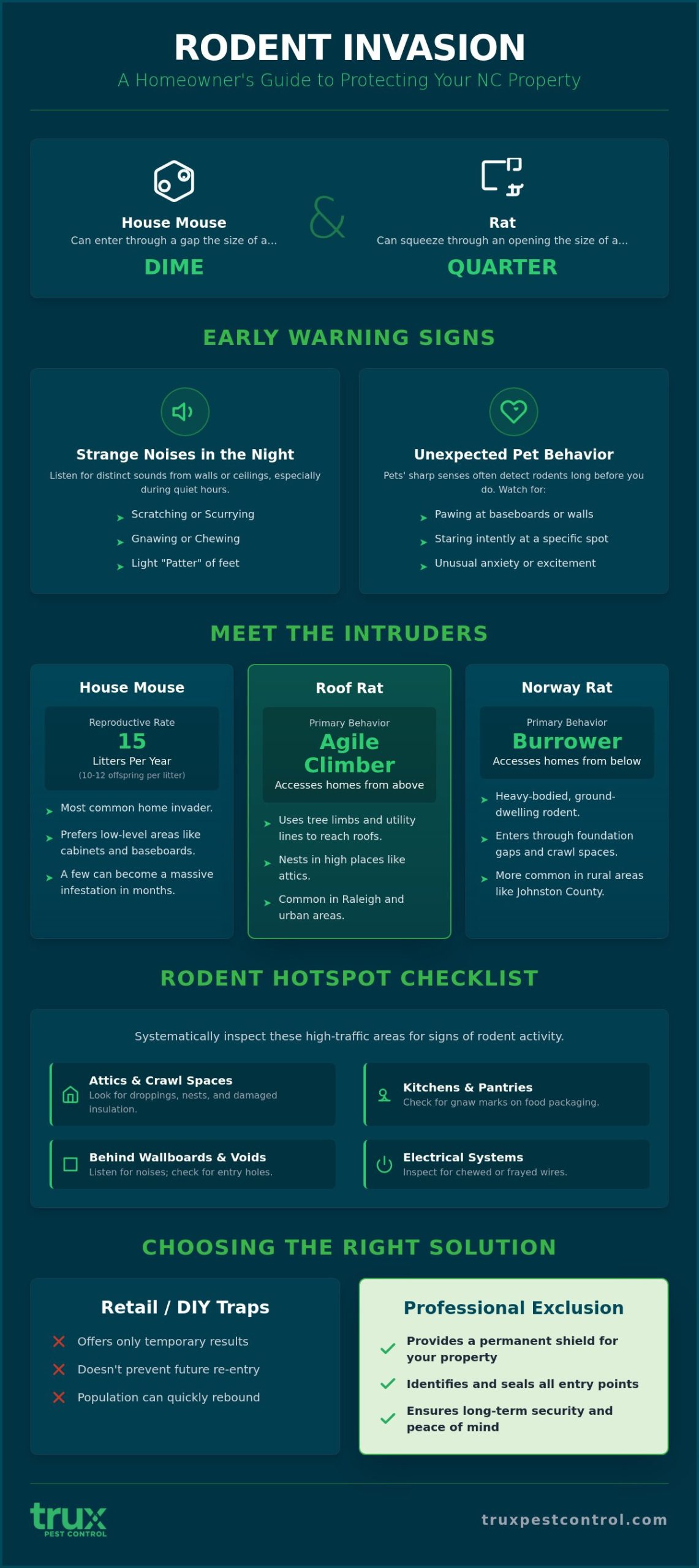
In Wake County and surrounding areas, the pressure increases as the seasons change. When temperatures drop in the fall and winter, local rodents seek the warmth and consistent food sources found within residential structures. A small opening the size of a dime is all a House mouse needs to gain entry, while a rat can squeeze through a gap no larger than a quarter. We recommend a proactive approach to monitoring your home’s perimeter and interior for these intruders.
Homeowners should remain vigilant for specific signs of rodents in house NC properties, including small dark droppings, gnaw marks on food packaging, and damaged insulation in crawl spaces or attics. These indicators often appear long before you ever lay eyes on the rodents themselves. Recognizing these red flags early is the most effective way to protect your home’s structural integrity and your family’s health.
Strange Noises in the Night
Sound is often the first clue that you have unwanted guests. While every home has its own rhythm of settling sounds or HVAC clicks, rodent activity has a distinct character. You might hear rhythmic scratching, gnawing, or a light “patter” noise coming from ceiling voids or behind wallboards. These sounds are most prevalent during the quiet NC winter months when rodents are most active indoors. If the noises are persistent and localized to one area, it’s a strong indicator that something is nesting or traveling through your wall cavities.
Unexpected Pet Behavior
Your pets often serve as an excellent early warning system. Cats and dogs have much sharper senses of smell and hearing than humans do, allowing them to detect rodents hidden deep within structures. Pay close attention if your pet suddenly begins pawing at baseboards, staring intently at a specific spot on the wall, or acting uncharacteristically anxious in a particular room. This focused attention often points directly to a rodent nesting site or a high-traffic travel path that is invisible to the naked eye. Utilizing your pet’s natural instincts can help you identify signs of rodents in house NC before the population expands.
Distinguishing Between Common North Carolina Rodent Species
North Carolina homeowners primarily deal with three specific invaders: the House Mouse, the Roof Rat, and the Norway Rat. Correctly identifying which species has entered your home is critical because their nesting habits and entry points differ significantly. A strategy that works for a ground-dwelling rat won’t be effective against a climber nesting in your attic. We treat every home with a methodical approach to ensure the specific threat is identified and neutralized.
The House Mouse is the most common intruder we encounter. Despite its small size, its reproductive potential is staggering. A single female can have up to 15 litters per year, with an average of 10 to 12 offspring per litter. This rapid growth means a few mice can become a massive problem in just a few months. To effectively Identify and Prevent Rodent Infestations, you must look for activity in low-level areas like kitchen cabinets and baseboards where mice prefer to travel.
In Raleigh and urban areas of Wake County, the Roof Rat is a frequent attic dweller. These rodents are agile climbers that use overhanging tree limbs or utility lines to reach your roofline. They prefer nesting in high places, making them much harder to detect than ground-based pests. Conversely, the Norway Rat is more common in Johnston County. These are heavy-bodied, ground-dwelling burrowers that often enter through foundation gaps or crawl spaces. Understanding these regional behaviors is why we prioritize a thorough inspection before beginning any treatment. If you suspect an issue, you can schedule a professional assessment to confirm which species is present.
Size and Shape of Droppings
Droppings are one of the most reliable signs of rodents in house NC. Mouse droppings are small, roughly the size of a grain of rice, with pointed ends. Rat droppings are significantly larger, measuring about half an inch or more. Norway rat droppings are typically blunt on the ends, while Roof Rat droppings have a more tapered, capsule-like shape. Fresh droppings appear dark and moist, while older ones are gray and crumble easily. This distinction helps us determine if an infestation is currently active or a remnant of a past issue.
Gnaw Marks and Teeth Patterns
Rodents possess incisors that never stop growing; this forces them to chew on hard surfaces to keep their teeth filed down. You might find gnaw marks on food packaging, plastic containers, or even structural wood. In North Carolina attics, the greatest danger is often chewed electrical wiring. This behavior poses a significant fire risk and is a primary reason why rapid identification is so important. Identifying these marks early allows for targeted exclusion that seals the specific entry points these pests are using to access your home. Monitoring these signs of rodents in house NC is a simple but effective way to protect your family’s safety.
High-Traffic Areas: Where to Look for Rodent Activity
Finding signs of rodents in house NC properties requires a methodical inspection of the areas where these pests feel most secure. Rodents prioritize safety, warmth, and proximity to food. While they may travel through your living room at night, they spend the majority of their time in the quiet zones of your home. We’ve found that identifying these high-traffic hubs is the most efficient way to assess the scale of an infestation and determine where exclusion efforts are most needed.
The attic serves as the primary gateway for Roof Rats, who utilize the insulation as nesting material and the height as protection from predators. In contrast, the kitchen pantry is the most common target for mice. They are opportunistic feeders that can chew through cardboard and thin plastic to reach dry goods. Utility rooms also act as a magnet for intruders because the heat from water heaters and the moisture from laundry lines create an ideal microclimate. However, the most overlooked area is often the crawl space, which functions as a hidden highway for rodents to move undetected between different sections of your structure.
Crawl Space Vulnerabilities
North Carolina’s humid climate often leads to moisture accumulation in crawl spaces, especially those with dirt floors. This damp environment is highly attractive to rodents, who require a consistent water source to survive. Open vents and gaps in the foundation provide easy access points. We specialize in the installation of crawl space vapor barriers to manage this moisture and create a less hospitable environment for pests. During an inspection, we look for tunneling marks in the fiberglass insulation and compressed paths in the dirt, both of which indicate heavy rodent traffic. Maintaining a dry, sealed crawl space is a critical component of a long-term exclusion strategy.
Exterior Entry Points
Prevention starts at the perimeter. Rodents are incredibly flexible; a mouse only needs a gap the size of a dime to enter, while a rat can fit through a hole the size of a quarter. We recommend performing a “pencil test” around your foundation. If a standard pencil can fit through a gap, a small rodent can likely follow. Pay close attention to weep holes in brick siding, utility line penetrations, and the gaps where different building materials meet. These small openings are the most common signs of rodents in house NC homes that go unnoticed until the pests are already established inside. Sealing these entry points with durable, professional-grade materials is the only way to ensure your home remains a protected sanctuary.
Effective perimeter maintenance often involves managing the vegetation and lawn areas surrounding the foundation to eliminate rodent cover. For landscaping professionals looking to streamline their operations and equipment access, you can explore lawn account trading platform to find specialized tools for maintaining high-density routes.
The Rodent Detection Checklist: A Room-by-Room Guide
Conducting a systematic search of your property is the most effective way to uncover hidden infestations. We recommend a methodical, room-by-room approach to identify the specific signs of rodents in house NC that often go unnoticed during daily activities. By focusing on the areas where pests feel most secure, you can take proactive steps to protect your home’s structural integrity.
- Kitchen: Pull out lower drawers and use a flashlight to check behind heavy appliances like the refrigerator and oven. Look for droppings or chewed packaging in the back corners of lower cabinets where crumbs often accumulate.
- Garage: Inspect the edges of stored cardboard boxes and the bottom corners of bags containing pet food or birdseed. Rodents often use garages as a staging area before moving into the main living quarters.
- Living Areas: Examine the baseboards and the floor behind furniture that is rarely moved. Check for small gaps where utility lines or cables enter the room, as these are common transit points.
- Basement and Crawl Space: Look for evidence of “tunneling” in insulation and check for the distinct, musky odor of rodent urine. These areas are often the heart of an infestation due to their low traffic and proximity to the ground.
Rub Marks and Smudges
Rodents have poor eyesight and rely on their whiskers and sense of touch to navigate. They typically travel along the same paths, hugging walls and baseboards. Over time, the natural oils and dirt in their fur leave behind dark, greasy smudges known as “sebum” trails. You’ll often find these marks around corners, along baseboards, and near entry holes. Seeing dark, thick rub marks is a clear indicator of a high-traffic area and suggests a larger population is present. If you notice these oily trails in your home, it’s time to request a professional inspection to identify the source.
Nesting Materials and Odors
A rodent’s nest is usually found in a secluded, undisturbed corner near a food source. They use shredded materials like paper, fiberglass insulation, and fabric to create a warm, protected environment for their offspring. Because a single female mouse can have up to 15 litters per year, finding a nest is a sign that immediate action is required. Along with physical debris, pay attention to your sense of smell. A concentrated, ammonia-like scent is a hallmark of rodent activity. This odor becomes more pungent as the infestation grows, often lingering in enclosed spaces like pantries or crawl spaces. Recognizing these signs of rodents in house NC allows you to intervene before the population reaches a critical mass.
Professional Rodent Exclusion and Control in North Carolina
Many homeowners start with store-bought traps when they first notice signs of rodents in house NC. While these tools might catch a single mouse, they rarely address the underlying vulnerability of your property. DIY methods focus on the intruders already inside. They don’t stop the next generation from following the same scent trails into your living space. We believe in a more permanent, structural solution that prioritizes long-term security over a temporary fix. Professional exclusion is the only way to ensure your home remains a sanctuary.
Our “Guardian” approach is built on over 20 years of local experience serving Raleigh and Johnston County. We don’t just set traps; we perform a forensic inspection of your home’s exterior to identify every quarter-sized gap or dime-sized hole. By combining technical expertise with a commitment to our neighbors, we restore the comfort and safety you expect from your environment. We act as a protective shield for your family, providing a level of thoroughness that retail products simply cannot match.
The Exclusion Difference
Effective rodent control requires sealing your home’s “envelope.” This process involves using professional-grade materials to close entry points in foundations, rooflines, and utility penetrations. We provide customized solutions for Clayton families that account for the specific architectural styles and environmental pressures of our region. For the most comprehensive protection, we recommend integrating these services with our general pest management program. This holistic approach ensures that as we secure your home against rodents, we’re also maintaining a shield against other common local pests. It’s a methodical strategy designed for longevity.
Protecting Your Family’s Health
Rodents are more than just a nuisance; they are carriers of pathogens like Hantavirus and Salmonella. Their presence can also trigger allergies and asthma, particularly in children. Our process includes professional sanitation to remove droppings and nesting debris that harbor these health risks. We utilize eco-friendly techniques that are safe for your Raleigh family and pets, ensuring the restoration of your home doesn’t introduce new concerns. Long-term monitoring allows us to stay proactive, ensuring that your property remains a fortified sanctuary year-round. Identifying the signs of rodents in house NC is just the first step. Schedule your rodent inspection with TruX today to experience the relief of a professionally protected home.
Secure Your Home Against Future Intrusions
Protecting your North Carolina home requires more than just reactive trapping. By identifying the specific signs of rodents in house NC, you’ve already taken the first step toward safeguarding your family’s health and your property’s value. A truly protected home starts with a sealed structural envelope and professional sanitation to remove lingering pathogens. We focus on these permanent solutions to ensure your home remains a fortified sanctuary rather than a target for seasonal invaders.
We bring over 20 years of local experience to every inspection, providing the methodical care and technical expertise your property deserves. Our eco-friendly and pet-safe rodent solutions ensure that your sanctuary remains healthy for everyone inside. With comprehensive exclusion services that keep pests out for good, we help you transition from persistent anxiety to total peace of mind. If the stress of home infestations has impacted your physical well-being, TRU BLOOM offers clinically proven support for stress-related hair loss. We are ready to partner with you to restore the comfort and security of your Clayton or Raleigh environment.
Protect your home from intruders—Schedule your Rodent Inspection
Frequently Asked Questions
What is the most common sign of a mouse in the house in North Carolina?
Small, dark droppings found in kitchen cabinets or along baseboards are the most frequent indicator of a mouse. These pests are nocturnal, so you’ll often see their waste before you see them. You might also notice shredded paper or gnawed cardboard in your pantry. Because mice are cautious, these physical clues are usually more reliable than waiting for a visual sighting in your living area.
How do I know if I have rats or mice in my NC attic?
The size of the droppings and the type of noises you hear can help you distinguish between the two. Roof rats, common in Raleigh, leave larger, half-inch capsule-shaped droppings and make heavy scurrying sounds. Mice leave smaller, rice-sized droppings and produce lighter, rapid scratching noises. Rats are also more likely to gnaw on larger structural elements, while mice focus on smaller items like fabric or paper for nesting.
Can rodents get into my house through the crawl space?
Rodents frequently use crawl spaces as primary entry points, especially if the space has a dirt floor or high moisture levels. They can squeeze through foundation gaps as small as a dime. Installing a professional vapor barrier and sealing foundation vents are essential steps to secure this “hidden highway” under your home. Without these protections, rodents have easy access to your floor joists and insulation, where they can nest undisturbed.
Are rodent droppings dangerous to clean up myself?
Rodent droppings can be hazardous because they carry pathogens such as Hantavirus and Salmonella. Disturbing dry droppings can release contaminated particles into the air, which can then be inhaled. We recommend using professional sanitation services or following strict safety protocols, including wearing a mask and gloves, to prevent respiratory issues. Never sweep or vacuum droppings, as this can further aerosolize the bacteria and viruses they contain.
How much does professional rodent exclusion cost in Raleigh?
The cost of professional rodent exclusion varies depending on the size of your property and the number of entry points that require sealing. A comprehensive inspection is necessary to provide an accurate estimate. Investing in permanent exclusion is often more cost-effective than repeatedly paying for temporary trapping that doesn’t solve the root issue. Our team focuses on long-term value by creating a durable barrier that protects your home for years.
Why do I have rodents in my house even though it is clean?
Rodents enter homes primarily for shelter and warmth, not just for food. While cleanliness helps, these pests can still find signs of rodents in house NC properties because they are attracted to the stable temperatures of your attic or crawl space. They only need a tiny opening and a nearby water source to establish a nest. Even the most spotless home provides the protection from predators that rodents crave.
What smells attract rodents to a home in Johnston County?
The scent of unsecured pet food, birdseed, and even the smell of damp, rotting wood can attract rodents to your Johnston County property. They have a highly developed sense of smell that leads them toward potential food sources and nesting sites. Keeping dry goods in airtight containers and managing moisture levels can significantly reduce these attractive odors. Reducing these scents is a vital part of a holistic prevention strategy.
How fast can a small rodent problem become a full infestation?
A small rodent problem can escalate into a full infestation in just a few months. A single female mouse can produce up to 15 litters a year, with each litter averaging 10 to 12 offspring. This rapid reproductive cycle means that ignoring the initial signs of rodents in house NC can lead to a population explosion. Taking immediate action at the first sign of activity is crucial for manageable control.
