


 Reviews
 Login
Login
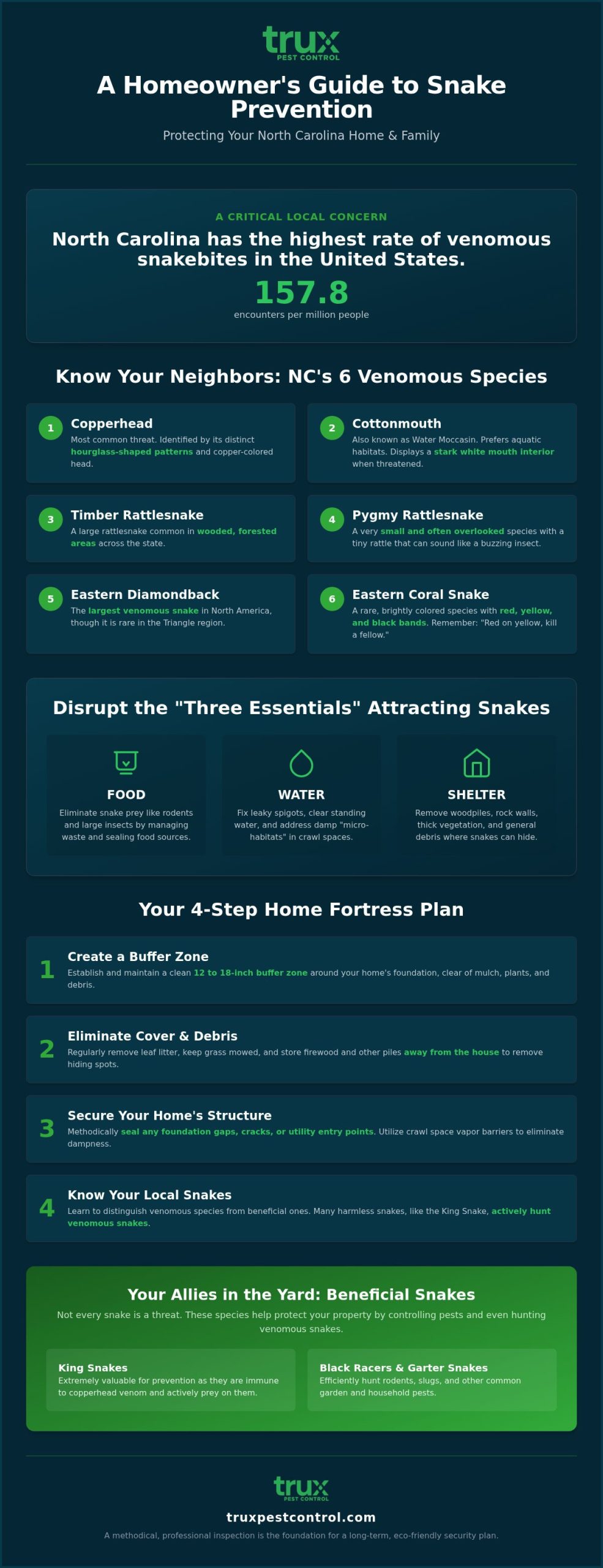
North Carolina holds the highest rate of venomous snakebites in the United States, with 157.8 encounters per million people. For families in the Raleigh area, this isn’t just a statistic; it’s a daily concern for the safety of children and pets. You’ve likely felt that flash of fear when seeing a copperhead near the porch or wondered if those store-bought repellents actually do anything. We understand that your home should be a sanctuary, and effective snake prevention home NC requires a disciplined, methodical approach rather than a quick fix. It’s about securing your perimeter and understanding the environmental factors that invite these visitors into your space.
This guide will show you how to transform your property into a snake-resistant fortress by focusing on expert exclusion and habitat modification. We’ll walk you through identifying the six venomous species native to our state, sealing structural gaps in your crawl space, and eliminating the food and cover that attract wildlife. You’ll gain the confidence to identify local species and a clear, sustainable maintenance plan to reduce future sightings. Our goal is to provide you with the technical expertise and peace of mind you need to enjoy your yard again without hesitation.
Key Takeaways
- Learn to distinguish between the six venomous species in North Carolina and harmless local snakes to accurately assess risks to your family and pets.
- Understand how to disrupt the “Three Essentials”—food, water, and shelter—to make your property naturally unappealing to wandering reptiles.
- Establish a 12-to-18-inch buffer zone and remove debris to implement the most effective strategies for snake prevention home NC in your yard.
- Secure your home’s structural integrity by sealing foundation gaps and utilizing crawl space vapor barriers to eliminate primary entry points.
- Discover why a methodical professional inspection serves as the foundation for a long-term, eco-friendly security plan for your Johnston or Wake County home.
Common Snakes in North Carolina: Identification and Risk Assessment
Living in Clayton or Raleigh means sharing our environment with a diverse range of wildlife. For many families in Johnston County, the sight of a snake in the yard triggers an immediate sense of unease. However, effective snake prevention home NC begins with accurate identification and a calm, methodical perspective. Professional pest managers distinguish between “poisonous” and “venomous.” Poison refers to toxins that are ingested or touched, while venom is a toxin injected through a bite. In North Carolina, we only deal with venomous species.
Snakes serve a vital ecological role as natural pest controllers. They hunt rodents and insects that can damage your property or spread disease. Seeing a snake often indicates a healthy ecosystem, but that doesn’t mean you want them nesting under your porch. If you encounter one, we recommend a strict “stop and assess” protocol. Stand still, maintain a distance of at least six feet, and identify the species from a safe vantage point. Most bites occur when homeowners try to kill or move the snake themselves. By remaining calm, you protect both your family and the local environment.
Identifying the ‘Big Six’ Venomous Species in NC
North Carolina is home to six venomous species, and recognizing them is essential for your security. The Copperhead is the most common threat in our region; it’s easily identified by its hourglass-shaped patterns and copper-colored head. Cottonmouths, also known as Water Moccasins, prefer aquatic habitats and display a stark white interior in their mouths when threatened. Our state also hosts three types of rattlesnakes. The Pygmy Rattlesnake is small and often overlooked; the Timber Rattlesnake is larger and common in wooded areas; and the Eastern Diamondback is the largest, though it’s rare in the Triangle. Finally, the Eastern Coral Snake is a rare, brightly colored species with red, yellow, and black bands. For a full breakdown of every local reptile, you can consult this comprehensive list of snakes in North Carolina to help you verify what’s in your backyard.
Beneficial Non-Venomous Neighbors
Not every snake is a threat. In fact, species like Black Racers and King Snakes are your best allies because they actively hunt and eat venomous snakes. King Snakes are particularly valuable for snake prevention home NC because they are immune to copperhead venom. Garter snakes are also harmless, serving as efficient garden protectors by eating slugs and small pests. Many non-venomous species use mimicry by vibrating their tails against dry leaves to imitate the sound of a rattlesnake to scare off perceived threats. Understanding these behaviors helps you differentiate between a genuine risk and a beneficial neighbor that’s helping keep your pest population in check.
Why Snakes Choose Your Property: Food, Water, and Shelter
Snakes don’t wander onto your land out of malice or a desire for confrontation. Like any other animal, they’re simply following a biological map toward the “Three Essentials” of survival: food, water, and shelter. To achieve lasting snake prevention home NC, we must look at your property through the eyes of a predator. If your yard provides consistent meals and a place to hide from the sun, snakes will naturally treat it as a home base. By understanding these attractants, we can begin the methodical process of making your environment less hospitable to them.
North Carolina’s humid subtropical climate creates perfect conditions for reptiles. High humidity levels often lead to damp “micro-habitats” in crawl spaces, under thick vegetation, or inside decorative rock walls. These pockets stay significantly cooler than the surrounding air during our sweltering July heat. According to the Amphibians and Reptiles of North Carolina, these environmental factors dictate where different species migrate and hunt throughout the year. A “clean” yard isn’t just about aesthetics; it’s a disciplined strategy to eliminate these hidden refuges.
Behavior also changes with the calendar. In the spring, snakes emerge from brumation, which is a state of dormancy similar to hibernation, to find mates and food. Throughout the summer, they’re at their most active. As fall approaches, they begin searching for secure, insulated spots to survive the winter. Maintaining a tidy perimeter year-round ensures that when snakes are on the move, they find your property unappealing and continue their search elsewhere.
The Rodent Connection: Starving the Predator
Most snakes on your property are there because they smell a meal. A mouse or rat infestation acts as a silent dinner bell for local predators. By addressing the root cause through general pest control in Raleigh NC, you remove the primary incentive for snakes to linger. We also recommend managing secondary attractions. Bird feeders often drop seeds that attract rodents, and leaving pet food bowls outdoors provides an easy snack for the very pests snakes love to eat. Eliminating the prey is the most effective way to starve the predator out of your yard.
Moisture and Humidity Attraction
Water is the second pillar of the “Three Essentials.” Snakes are highly sensitive to dehydration and seek out damp areas to regulate their body temperature. Standing water in low spots, clogged gutters, and leaky outdoor faucets create ideal conditions for them to thrive. Even excessive mulch or over-watering your garden can trap enough moisture to attract both snakes and their favorite prey, such as frogs and toads. If you’re concerned about hidden attractants on your property, you can schedule a professional site evaluation to identify and resolve these environmental vulnerabilities.
5 Essential Steps for Snake Prevention in Your NC Yard
Transforming your property into a snake-resistant fortress requires a shift in landscaping philosophy. For effective snake prevention home NC, we focus on removing the tactical advantages snakes use to move through your yard undetected. By creating an environment that feels exposed and dangerous to a reptile, you naturally encourage them to seek shelter elsewhere. This methodical approach starts at your home’s foundation and moves outward to the property line.
Start by establishing a “clear zone” or buffer around your foundation. We recommend a strip of 12 to 18 inches of clear space, preferably filled with large-diameter river rock or gravel. This creates a physical and psychological barrier. Snakes are highly vulnerable to hawks and other predators when they cross open ground, so they’re less likely to approach your walls if they can’t stay hidden. Pair this with a commitment to lawn height; keep your grass mowed short to eliminate concealment opportunities. When your lawn is tidy, you maintain clear sightlines that significantly reduce the risk of accidental encounters during outdoor activities.
You might be tempted to use store-bought chemical repellents, but we advise against it. Research from the Common Snakes in North Carolina guide by NC State Extension confirms that sulfur, mothballs, and aromatic oils have little to no measurable effect on snake behavior. Physical habitat modification is the only proven method to achieve lasting results. Focus your energy on structural changes rather than temporary sprays that wash away with the first Raleigh rainstorm.
Landscaping for Low Visibility
Replace dense, low-growing groundcovers like English Ivy or Pachysandra with thinner mulch or native grasses. These thick vines create a humid, shaded environment where snakes can hide in plain sight. Prune your shrubs and bushes so there’s at least 6 inches of clearance between the bottom branches and the soil. This simple change allows you to see exactly what’s underneath a plant before you reach in with a garden tool or lawn mower. Using large-diameter river rock in garden beds also makes the ground uncomfortable for snakes to traverse compared to soft, damp pine straw.
Eliminating Hiding Spots and Debris
Methodical debris removal is your next priority in the disciplined guardian approach. Stack your firewood on a rack elevated at least 12 inches off the ground to prevent rodents and snakes from nesting in the bottom layers. You should also secure the area beneath outdoor sheds and play structures with hardware cloth to block opportunistic entry. Clutter provides the thermal regulation snakes need to survive NC heat, offering a cool refuge during the day and a warm spot at night. By clearing leaf litter and dismantling old, unmortared rock walls, you remove the insulation these reptiles require to thrive on your land.
Structural Exclusion: Keeping Snakes Out of Your Home and Crawl Space
While managing your yard is the first step, the ultimate goal is to ensure your home’s interior remains a secure sanctuary. We utilize a “Disciplined Guardian” approach to home integrity, which focuses on sealing the structural envelope of your house. This means looking beyond the surface to identify every potential vulnerability. A snake only needs a gap as small as its head to gain entry; for many local species, that’s an opening of just 1/4 inch. Structural repairs provide a permanent shield that temporary repellents simply can’t match, ensuring long-term peace of mind for your family.
In North Carolina, the crawl space is the number one vulnerability for snake intrusions. These areas are often cool, dark, and neglected, making them the perfect refuge for reptiles seeking to escape the midday heat. Older homes in Clayton and Raleigh often have foundation vents that are damaged or gaps where utility pipes enter the structure. By methodically identifying and sealing these points, you create a physical barrier that stops a problem before it starts. This proactive mindset is the cornerstone of an effective snake prevention home NC strategy.
Sealing Entry Points and Foundation Cracks
We recommend using heavy-duty hardware cloth and weather-resistant sealants to close gaps in your foundation. Standard expanding foam is often insufficient because rodents can chew through it, creating new pathways for snakes to follow. Pay close attention to garage door seals and basement window wells, as these are common high-traffic areas for pests. Screening all attic and crawl space vents with professional-grade mesh ensures that your home can still breathe without inviting unwanted visitors inside. Every sealed crack is a step toward a more resilient home.
The Role of Crawl Space Vapor Barriers
Moisture control is a powerful, often overlooked tool in the fight against snakes. Damp crawl spaces attract insects and rodents, which serve as the primary food sources for predators. By installing a high-quality vapor barrier, you disrupt this food chain while making the environment under your home less attractive to reptiles. You can review the Vapor Barrier Crawl Space Cost in NC to understand how this investment provides multi-benefit protection against both pests and structural rot. A clean, dry crawl space is a fundamental component of a comprehensive snake prevention home NC plan, offering a healthier environment for your entire household.
Professional Snake Mitigation: The TruX ‘Disciplined Guardian’ Approach
We believe that a secure home begins with a methodical assessment. A professional inspection serves as the essential first step in creating a comprehensive security plan. Our team brings over 20 years of local expertise in Johnston and Wake Counties to every property we evaluate. We don’t just look for snakes; we identify the environmental pressures that draw them to your land. This disciplined approach ensures that your snake prevention home NC plan is built on facts rather than guesswork. Our goal is to restore your peace of mind by providing a clear, transparent path to total protection.
It’s vital to understand the specific scope of our professional services. We specialize in exclusion and habitat modification to prevent entry. We don’t perform wildlife trapping or relocation. Our focus remains on the structural integrity of your home and the management of the surrounding ecosystem. By sealing the envelope of your house and managing prey populations through our general pest control services, we create a multi-layered defense that is both effective and eco-friendly. This strategy addresses the root causes of snake activity, providing a permanent solution rather than a temporary fix.
Integrated Pest Management (IPM) for Long-Term Safety
We utilize the Integrated Pest Management (IPM) cycle to maintain your home’s protective shield year-round. This methodical process involves four critical stages: inspection, identification, action, and monitoring. Our technicians evaluate your specific property risks in Clayton or Raleigh to determine which exclusion techniques are most necessary for your unique landscape. We look at drainage patterns, vegetation density, and foundation health. A recurring service plan ensures that as the seasons change, your home remains a fortress against opportunistic reptiles and the rodents they hunt. This collaborative effort between homeowner and expert builds long-term stability and safety.
When to Call the Experts
Recognizing when to call the experts is a key part of responsible homeownership. You should seek professional help if you notice recurring signs of a structural breach, such as unexplained gaps in foundation vents or frequent sightings of shed skins near the crawl space. An infestation of rodents or insects often signals that a larger predator might follow. A professional exclusion audit provides the relief that comes from knowing every vulnerability has been addressed by a seasoned professional. We work as your partner to restore comfort and security to your personal environment. You can take the first step toward a safer home and sign up for a professional inspection today.
Take Control of Your Home’s Security
Securing your property against reptiles is a systematic process that requires attention to detail and a commitment to long-term maintenance. You now understand how to identify North Carolina’s venomous species, disrupt the food and moisture cycles that attract them, and seal the structural vulnerabilities in your crawl space. By applying these methodical exclusion and habitat modification techniques, you’re building a permanent shield for your family. A disciplined strategy for snake prevention home NC ensures you can enjoy your yard with total confidence.
TruX stands ready to be your partner in this process. We combine 20 years of local experience in Johnston and Wake Counties with a family-owned, eco-friendly approach to pest management. Our technicians are specialized crawl space moisture control experts who understand exactly how to optimize your home’s defenses. We focus on the structural integrity and environmental factors that keep your living space safe and comfortable for the long term.
You don’t have to navigate these environmental challenges alone. Take the first step today toward a more secure, snake-resistant sanctuary for your children and pets. We look forward to helping you restore peace of mind to your home.
Frequently Asked Questions
What is the best snake repellent for North Carolina homes?
Physical habitat modification is the only proven method for long-term success. Chemical repellents like mothballs, sulfur, or essential oil sprays have little to no measurable effect on snake behavior and can negatively impact your soil. We recommend focusing your energy on the “Disciplined Guardian” approach: removing debris, maintaining short grass, and sealing structural gaps. These permanent changes are far more effective than temporary chemical solutions.
Can snakes climb into my attic or onto my roof in NC?
Yes, several species native to our region, such as the Eastern Rat Snake, are proficient climbers. They can easily scale brick walls, wooden siding, and overhanging tree branches to reach your roofline. Once there, they may enter your attic through damaged soffits or unscreened vents. To prevent this, keep tree limbs trimmed at least six feet away from your home and ensure all roof-level entry points are secured with professional-grade mesh.
How do I tell if a snake in my yard is venomous?
You should look for specific visual markers while maintaining a safe distance of at least six feet. Venomous pit vipers in North Carolina often have triangular heads and vertical, cat-like pupils, while copperheads display a distinct hourglass pattern along their bodies. However, because many non-venomous snakes use mimicry to appear dangerous, the safest protocol is to assume any unknown snake is venomous and avoid contact entirely.
What should I do if I find a snake skin in my crawl space?
Finding a shed skin is a clear signal that your crawl space currently provides the humidity and security a snake needs. You should use this discovery as a prompt to perform a methodical structural audit of your foundation. Look for gaps near utility pipes, sill plates, or damaged vents where the snake may have entered. Sealing these openings ensures that a single visitor doesn’t turn into a recurring presence under your home.
Are snakes in NC more active at night or during the day?
Their activity levels change based on the seasonal temperatures in Johnston and Wake Counties. During the mild spring and fall months, snakes are primarily active during the day. However, during the extreme heat of a North Carolina summer, many species become nocturnal. They hunt at night when temperatures are more manageable, which is why we recommend using a flashlight when walking pets or moving through your yard after dark.
Does cutting my grass short really help keep snakes away?
Maintaining a short lawn is a fundamental step for snake prevention home NC because it removes essential cover. Snakes are highly vulnerable to predators like hawks and owls, so they avoid crossing open, short-trimmed areas where they’re exposed. A tidy lawn also improves your own visibility, allowing you to spot a snake from a distance and avoid an accidental encounter while playing or gardening.
Will a vapor barrier in my crawl space stop snakes from entering?
A vapor barrier is a critical component of a multi-layered defense because it manages humidity levels. While it doesn’t physically block every entry point, it removes the damp environment that attracts snakes and their primary food sources, such as rodents and insects. By keeping your crawl space dry and clean, you make the area significantly less attractive to reptiles seeking a cool, moist refuge from the sun.
What attractants am I accidentally leaving out for snakes?
Many homeowners accidentally invite snakes by providing resources for their prey. Bird feeders drop seeds that attract mice, and unsecured pet food bowls provide an easy meal for various rodents. Additionally, un-elevated woodpiles, leaf litter, and thick mulch beds create the “micro-habitats” snakes need for thermal regulation. Removing these accidental invitations is a vital part of transforming your property into a snake-resistant fortress.
