


 Reviews
 Login
Login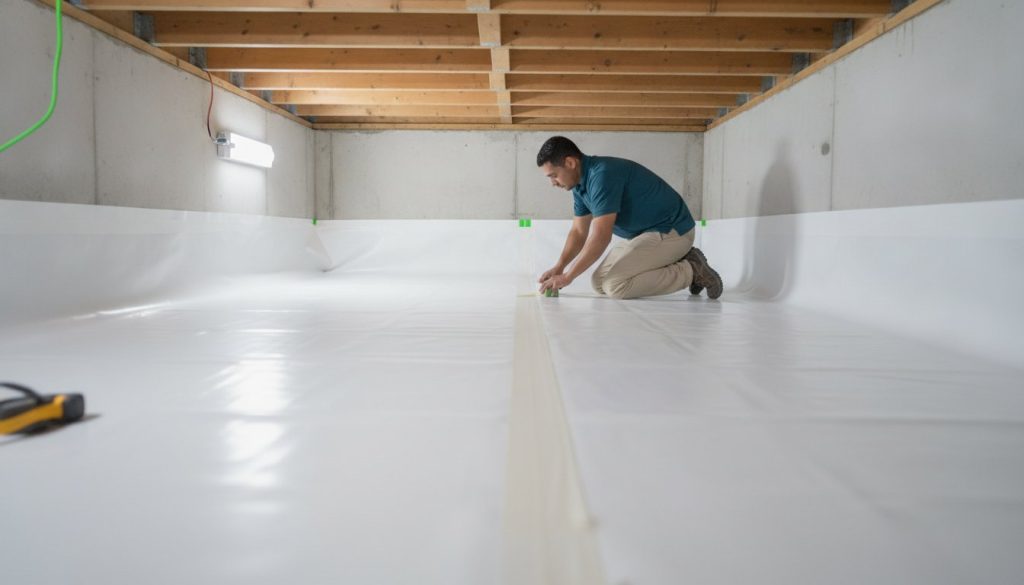
Did you know that the heavy clay soil and 90% humidity levels across the North Carolina Piedmont can turn your crawl space into a breeding ground for wood-destroying fungi long before you smell the first hint of mildew? It’s a common concern for families in the Raleigh-Durham area who want to protect their largest investment from the ground up. You’re likely looking for a way to stop high energy bills and prevent pests, but finding a clear answer on the vapor barrier crawl space cost NC experts charge can feel like a moving target.
We understand that you want a home that feels secure and healthy without any hidden surprises. We’ve put together this guide to provide total transparency on how local labor rates, material thickness, and state building codes influence your project. You’ll learn exactly how a professional installation shields your floor joists from rot and helps lower your cooling costs. We’ll also walk through the critical differences between a basic moisture shield and full encapsulation so you can choose the right level of protection for your property and your peace of mind.
Key Takeaways
- Understand the 2026 market rates for a vapor barrier crawl space cost NC homeowners typically encounter, ranging from $1,200 to $4,500 for standard professional installations.
- Compare the performance and durability of different polyethylene thicknesses, from the code-minimum 6-mil to premium 20-mil reinforced liners.
- Identify the critical factors that impact your project quote, including crawl space square footage and the necessity of mold remediation before the barrier is laid.
- Evaluate the structural and financial differences between a basic ground-cover vapor barrier and a comprehensive full encapsulation system.
- Discover why integrating moisture control with expert pest management is the most effective way to prevent termite infestations and wood-destroying fungi.
Crawl Space Vapor Barrier Cost in NC: 2026 Market Overview
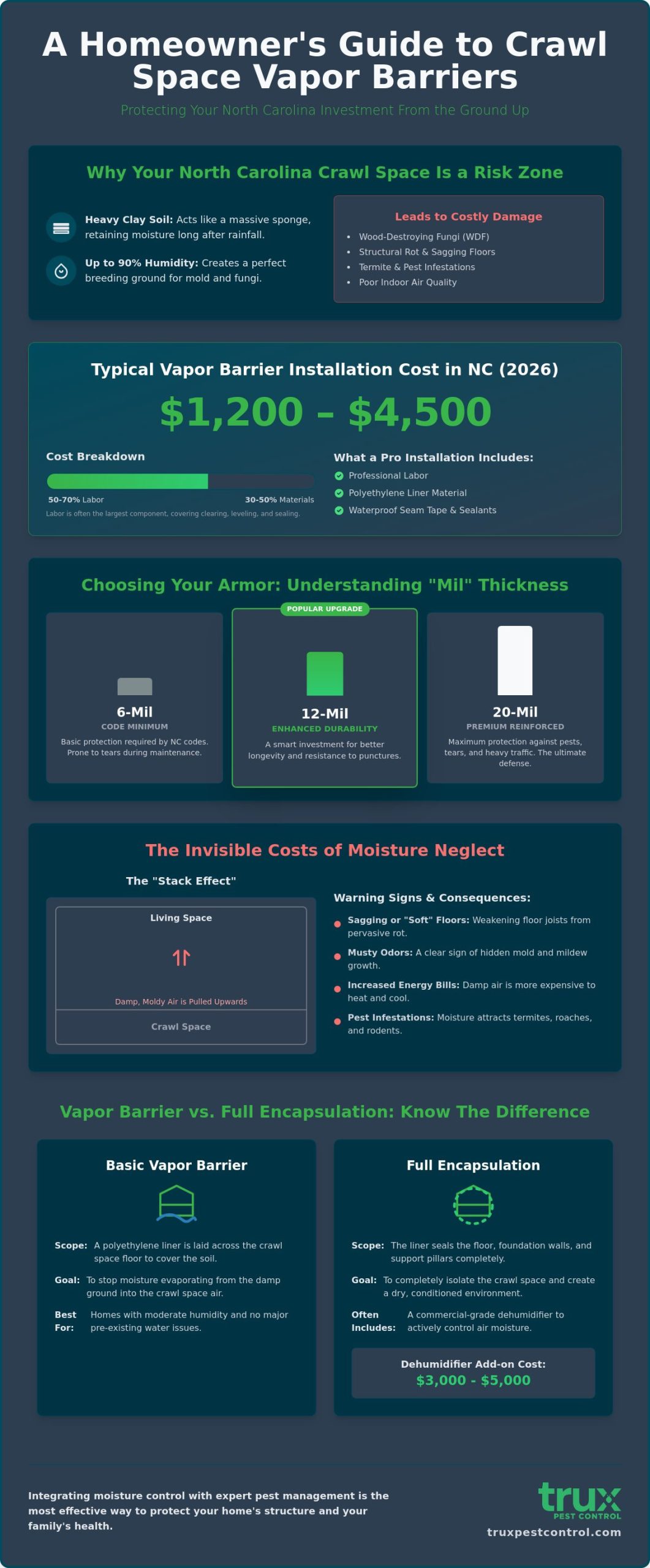
In North Carolina, the ground beneath your home isn’t just dirt; it’s a reservoir. Our region’s famous red clay soil acts like a massive sponge, holding onto moisture long after a summer storm has passed. When this damp soil meets the 90% humidity typical of a Raleigh July, your crawl space becomes a primary source of structural decay. A standard vapor barrier is a high-density polyethylene sheet designed to stop this moisture from evaporating into your floor joists. While the North Carolina building code requires a minimum 6-mil thickness for a Class I vapor retarder, many local homeowners are opting for 12-mil or 20-mil reinforced liners to ensure long-term durability against tears and pests.
Understanding the vapor barrier crawl space cost NC residents face in 2026 requires looking at the specific needs of your foundation. For a professional installation on a standard-sized home, price ranges typically fall between $1,200 and $4,500. This investment covers more than just plastic; it includes professional labor, which often accounts for 50% to 70% of the total quote. This “dirty work” involves clearing debris, leveling soil, and ensuring a 12-inch overlap at all joints to meet state standards. A sealed moisture barrier is a fundamental step in Crawl space encapsulation, providing a significant upgrade over a loose-laid ground cover by using specialized tape to create a continuous, air-tight shield.
The “Invisible” Costs of Moisture Neglect
Moisture neglect is a quiet thief that steals the structural integrity of your home. When humidity levels under your house consistently exceed 70%, wood-destroying fungi (WDF) begin to feast on your support beams. In older Clayton homes, this often manifests as sagging floors or “soft” spots in your hallways that indicate the wood is losing its strength. The Stack Effect is a physical phenomenon where rising warm air creates a vacuum that pulls damp, unconditioned air from your crawl space up into the living areas of your home. This means that if your crawl space is damp and moldy, the air your family breathes likely is too.
Initial Inspection: What to Expect
A professional moisture assessment is the only way to get an accurate quote. During this process, a technician looks for standing water, existing mold growth, or signs of termite activity that a simple plastic sheet won’t fix. If mold is already present on your floor joists, it must be remediated before the barrier is installed, or you’ll simply be trapping the rot inside. Identifying these issues early prevents “scope creep” where the price rises unexpectedly mid-project. Starting with a thorough inspection from a trusted local expert like TruX Pest Control gives you a clear, honest baseline for your home’s needs. We focus on the unique soil and climate challenges of Johnston and Wake Counties to ensure your protection is built to last.
Breaking Down Vapor Barrier Costs by Component
Calculating the vapor barrier crawl space cost NC homeowners receive involves looking at three distinct categories: raw materials, specialized labor, and mechanical components. It’s a common misconception that the roll of plastic is the primary expense. In reality, the quality of the liner and the difficulty of the installation site drive the final number. High-performance polyethylene now accounts for nearly half of the global market because of its ability to withstand the unique pressures of subterranean environments. When you review a professional quote, you’re paying for a system designed to remain intact for decades, not just a temporary fix.
Beyond the liner itself, accessory costs add up quickly. A professional installation requires specialized waterproof seam tape, foundation pins to secure the liner to the masonry, and professional-grade sealants. In many North Carolina homes, a barrier alone cannot combat our extreme humidity. This is where Department of Energy research highlights the value of sealed systems. Adding a commercial-grade dehumidifier, which typically costs between $3,000 and $5,000 installed, ensures the air remains dry enough to prevent wood rot. If you are unsure which material suits your foundation, you can request a detailed assessment to see what’s truly necessary for your home.
Mil Thickness: Choosing the Right Protection
The “mil” refers to the thickness of the plastic, where one mil equals one-thousandth of an inch. A 6-mil liner is the absolute minimum required by North Carolina building code. While it’s budget-friendly, it’s thin and prone to tearing if an HVAC technician or plumber crawls over it. For most homes in Johnston County, 12-mil reinforced liners are the standard choice. They offer a balance of puncture resistance and cost-effectiveness. If you plan to stay in your home for 20 years or more, a 20-mil premium liner provides commercial-grade protection that is almost impossible to damage during routine maintenance.
Labor and Site Preparation
Labor is the most significant part of your investment, often making up 50% to 70% of the total project cost. This is because a liner is only as good as the surface beneath it. Our teams spend hours on debris removal, pulling out old insulation, wood scraps, and construction trash that could harbor pests. We also focus on leveling the soil. If the ground is uneven, water can pool under the new barrier, creating “pockets” of moisture. Additionally, homes with a “Tight Space Premium”—where clearance is under 18 inches—require more time and effort to navigate, which will be reflected in the labor quote.
Factors That Influence Your North Carolina Quote
Your final estimate for protection depends on several variables that go beyond simple measurements. While square footage is the primary driver of material volume, the physical condition of the foundation often dictates the complexity of the work. For example, we cannot lay a new liner over active white or black mold. If our technicians discover fungal growth on your floor joists, remediation must happen first to ensure we aren’t trapping rot against the wood. This step ensures the long-term health of your structure, though it does impact the initial vapor barrier crawl space cost NC homeowners should budget for.
Site-specific challenges in Wake and Johnston Counties also play a significant role. If your home is located in a flood-prone area or has poor grading, a vapor barrier alone may not be enough. We often recommend supplemental drainage solutions to manage groundwater, such as:
- Sump Pumps: Essential for removing water that collects in low spots during heavy North Carolina downpours.
- French Drains: Installed internally to redirect hydrostatic pressure away from your foundation walls.
- Pest Exclusion: Sealing entry points for rodents and snakes, which is a natural extension of our expertise as a disciplined guardian of your home. Homeowners concerned about wildlife intrusion can also benefit from a comprehensive snake prevention strategy for NC homes that addresses the structural gaps these reptiles use to enter.
The Impact of Regional Climate
Raleigh’s seasonal humidity swings require the use of high-performance adhesives and tapes that won’t lose their bond when the temperature climbs. The local soil composition also matters. The heavy red clay found in much of our service area drains slowly, leading to prolonged moisture contact with your foundation. Homeowners in Smithfield and Selma, particularly those near the Neuse River basin, often face higher water tables. These properties typically require more robust moisture management strategies to keep the environment beneath the home stable and dry year-round.
Permits and Building Codes
North Carolina building codes are specific about how a crawl space must be handled. If you choose to convert a vented space into a closed system, a local municipal permit is required, which typically costs between $100 and $300 in Wake and Johnston Counties. One critical requirement is the termite inspection gap. To maintain your termite warranty and comply with state regulations, we must leave a 3 to 4-inch unobstructed gap between the top of the liner and the wood sill plate. This allows for clear visual inspections, ensuring that your protective barrier doesn’t accidentally provide a hidden highway for wood-destroying insects.
Vapor Barrier vs. Full Encapsulation: A Price Comparison
Homeowners often feel overwhelmed by the wide range of price points found in moisture control quotes. To make an informed choice, it’s helpful to view these services as different levels of defense. A standard vapor barrier, typically costing between $1,200 and $3,500, focuses on ground-level protection. This service includes debris removal, 100% ground coverage with a high-quality polyethylene liner, and basic seam sealing. On the other end of the spectrum, full encapsulation is a comprehensive environmental management system. With costs ranging from $5,000 to over $15,000, this service includes wall liners, sealed vents, and the installation of a commercial-grade dehumidifier.
Many families in the Raleigh-Durham area find success with a “hybrid” approach. This involves a professional-grade ground barrier paired with a high-capacity dehumidifier, but without the full wall-to-wall sealing of encapsulation. This middle-tier option effectively manages the vapor barrier crawl space cost NC residents pay while still addressing the high humidity that a simple plastic sheet cannot control on its own. To help decide which path is right for your home, consider these factors:
- Moisture History: If you have active mold growth, a basic barrier is rarely enough.
- Topography: Homes in low-lying areas often require the mechanical humidity control of encapsulation.
- Timeline: If you’re planning to sell within two years, a basic barrier may satisfy inspector requirements.
- Health Goals: Families with allergy sufferers often benefit from the improved air quality that comes with a fully sealed system.
When a Basic Barrier is Enough
A basic barrier is often sufficient for newer homes with excellent exterior drainage and no history of standing water. If your foundation is high and dry, and your primary goal is to prevent ground moisture from rising into your floor joists, this is a practical choice. It’s also an effective strategy for budget-conscious homeowners who combine their barrier with regular termite inspections. This proactive combination ensures that while the ground is covered, a professional is still monitoring the wood for signs of subterranean pests. We often see this approach work well in communities where the soil is less prone to holding water.
The Long-Term ROI of Full Encapsulation
While the upfront cost of full encapsulation is higher, the return on investment is measured in structural longevity and monthly savings. By creating a conditioned space, you protect your HVAC ductwork from the corrosion and condensation common in humid North Carolina summers. Research indicates that sealing and conditioning a crawl space can reduce heating and cooling costs by 10% to 20%. In the 2026 real estate market, local buyers increasingly view an encapsulated foundation as a premium feature. They recognize that it reduces future maintenance risks and significantly improves the overall comfort of the home.
Why TruX Pest Control is the Right Choice for Your Installation
Choosing the right partner for your foundation project ensures that your vapor barrier crawl space cost NC investment yields maximum results. Most waterproofing companies look at foundations through a single lens: keeping water out. At TruX Pest Control, we take a more comprehensive approach. We understand the “pest-moisture nexus” better than anyone else in the Raleigh area. Our team recognizes that a damp crawl space isn’t just a structural risk; it’s an invitation for wood-destroying insects and rodents. By addressing moisture, we’re simultaneously fortifying your home against the pests that thrive in high-humidity environments.
With over 20 years of local experience in Johnston and Wake Counties, we’ve seen exactly how our regional climate affects different foundation types. We serve families from Wake Forest to Smithfield with a commitment to transparent pricing. You won’t find high-pressure sales tactics or padded bills here. Instead, we offer methodical, detail-oriented solutions that prioritize the long-term stability of your home. Our eco-friendly focus means we use sustainable materials and techniques that protect your family and pets while effectively managing environmental challenges. We act as a seasoned partner to the homeowner, valuing thoroughness over quick, superficial results.
Integrated Pest and Moisture Management
We design every installation with long-term maintenance in mind. This includes leaving the essential termite inspection gaps required by North Carolina code, ensuring your home remains easy to monitor for activity. By reducing humidity levels, we naturally eliminate the primary attractant for German roaches and rodents in Johnston County. TruX Pest Control maintains a commitment to the “Disciplined Guardianship” of your home, ensuring that every layer of protection we install serves to restore comfort and security to your personal environment.
Get Your Custom NC Quote Today
Taking the first step toward a drier, healthier home is a simple, three-step process. First, we conduct a professional moisture assessment to identify your specific needs. Next, we provide a detailed, transparent proposal that explains the technical execution of the project. Finally, our seasoned professionals perform the installation with the precision you expect from a local expert. Our service area covers the entire region, from the growing neighborhoods of Clayton to the historic homes in Smithfield. If you’re ready to protect your foundation and lower your vapor barrier crawl space cost NC through a strategic, long-term investment, Get a Free Quote today.
Secure Your Home’s Foundation and Future
Managing the humidity under your home is one of the most effective ways to preserve its structural integrity and resale value. By understanding the specific variables that influence the vapor barrier crawl space cost NC residents encounter, you can make a choice that aligns with your budget and long-term goals. A dry foundation is a strong foundation. Whether you opt for a budget-friendly ground cover or a comprehensive moisture management system, the result is a healthier environment for your family.
As a family-owned and operated business with over 20 years of local NC experience, we take pride in acting as a disciplined guardian for your property. We specialize in eco-friendly pest and moisture solutions that address the unique soil challenges of our region. Our methodical approach ensures that every seam is sealed and every inspection gap is maintained. This provides the quality and longevity your family deserves.
We’re here to help you navigate these technical decisions with clarity and transparency. Taking a proactive step today prevents the “invisible” costs of moisture damage from accumulating over time. It’s about peace of mind. We look forward to partnering with you to ensure your home remains a safe and comfortable sanctuary for years to come.
Frequently Asked Questions
How much does a vapor barrier cost per square foot in North Carolina?
Professional installation costs are generally calculated by combining material and labor expenses. For the polyethylene liner alone, standard 6-mil materials typically range from $0.15 to $0.50 per square foot, while premium 20-mil reinforced liners can cost between $0.50 and $1.00 per square foot. Because labor accounts for 50% to 70% of the project, the total investment reflects the difficulty of the crawl space environment and the precision required for a proper seal.
Does a vapor barrier really stop termites and pests?
A vapor barrier is a powerful deterrent because it eliminates the high-moisture environment that pests like termites, German roaches, and rodents need to survive. While it isn’t a chemical treatment, it removes the primary attractant for wood-destroying organisms. We always maintain a 3 to 4-inch inspection gap at the top of the foundation wall to ensure your termite warranty remains valid and visual inspections are easy to perform.
Is a 6-mil vapor barrier enough for an NC crawl space?
While a 6-mil liner meets the minimum North Carolina building code, it’s often not durable enough for long-term protection. This thickness is prone to tearing if a technician needs to crawl under your home for plumbing or HVAC repairs. Most homeowners find that the vapor barrier crawl space cost NC experts quote for a 12-mil or 20-mil reinforced liner is a better value because it provides much higher puncture resistance and longevity.
How long does a professional vapor barrier installation take?
Most standard installations are completed within one to two business days. This timeframe includes the critical site preparation phase where we remove old insulation and debris then level the soil to prevent water pooling. If your home requires mold remediation or structural repairs before the liner is laid, the process may take longer to ensure the foundation is completely stabilized and healthy.
Can I install a crawl space vapor barrier myself to save money?
You can attempt a DIY installation, but it’s physically grueling work that requires specialized tools and adhesives to create an airtight seal. Many homeowners who try this find it difficult to properly secure the liner to masonry walls or navigate tight clearances. An improper installation can trap moisture against your wood floor joists, which may lead to rot issues that are much more expensive to fix than the initial cost of professional help.
Will a vapor barrier lower my energy bills in Raleigh?
Yes, a properly installed barrier helps reduce your heating and cooling costs by lowering the humidity levels your HVAC system must process. When the air under your home is dry, your air conditioner doesn’t have to work as hard to remove moisture from the living spaces above. This reduction in HVAC strain is particularly noticeable during our humid North Carolina summers, often leading to more consistent indoor temperatures and lower monthly bills.
Do I need a dehumidifier if I have a vapor barrier in NC?
In the North Carolina Piedmont, a vapor barrier alone is often insufficient to control the 70% to 90% humidity levels we see in the summer. While the plastic stops moisture from rising out of the soil, it doesn’t address the damp air entering through foundation vents. We typically recommend a commercial-grade dehumidifier to keep the environment beneath your home below 55% relative humidity, which is the key to preventing mold and fungi growth.
What is the difference between a vapor barrier and encapsulation?
A vapor barrier refers specifically to a polyethylene sheet that covers the ground of your crawl space to block soil moisture. Encapsulation is a more comprehensive system that seals the floor, foundation walls, and vents while adding mechanical humidity control. Encapsulation offers the highest level of protection for the vapor barrier crawl space cost NC families invest, as it transforms the area into a clean, conditioned part of the home’s envelope.
