



 Reviews
 Login
Login
It usually starts outside.
You’re walking through your yard, tending to your landscaping, or watering your plants—and suddenly, you feel it. A sharp, burning sting. Then another. Before you know it, you’ve disturbed a fire ant mound, and now your outdoor space feels more like enemy territory than your own backyard.
Fire ants aren’t just a nuisance—they’re aggressive, persistent, and notoriously difficult to control. And while many homeowners focus on ants inside the home, the real battle often begins in your yard, garden beds, and even your plant pots.
If you’re dealing with fire ants in areas like Clayton, Raleigh, or Wendell, this guide will help you understand why they’re there, why they’re so hard to eliminate, and why professional ant control is the most effective way to reclaim your property.
Why Fire Ants Love Your Yard (and Your Plant Pots)
Fire ants are outdoor pests first. Your lawn, landscaping, and potted plants create the perfect environment for them to thrive.
Here’s what attracts them:
- Moist soil from irrigation systems, rain, or overwatering
- Loose, disturbed soil in flower beds, gardens, and pots
- Warm temperatures, especially during spring and summer in North Carolina
- Food sources, including insects, seeds, and even pet food
Plant pots are an especially common hiding place that many homeowners overlook. The soil stays warm and protected, making it an ideal nesting site. Move a pot that’s been sitting undisturbed, and you may uncover a full colony underneath—or inside it.
What Makes Fire Ants So Dangerous?
Unlike other ant species, fire ants don’t just invade—they defend.
When their mound is disturbed, they swarm aggressively and sting repeatedly. These stings can cause:
- Burning, painful welts
- Itching and irritation that lasts for days
- Allergic reactions in some individuals
- Risk for children and pets playing in the yard
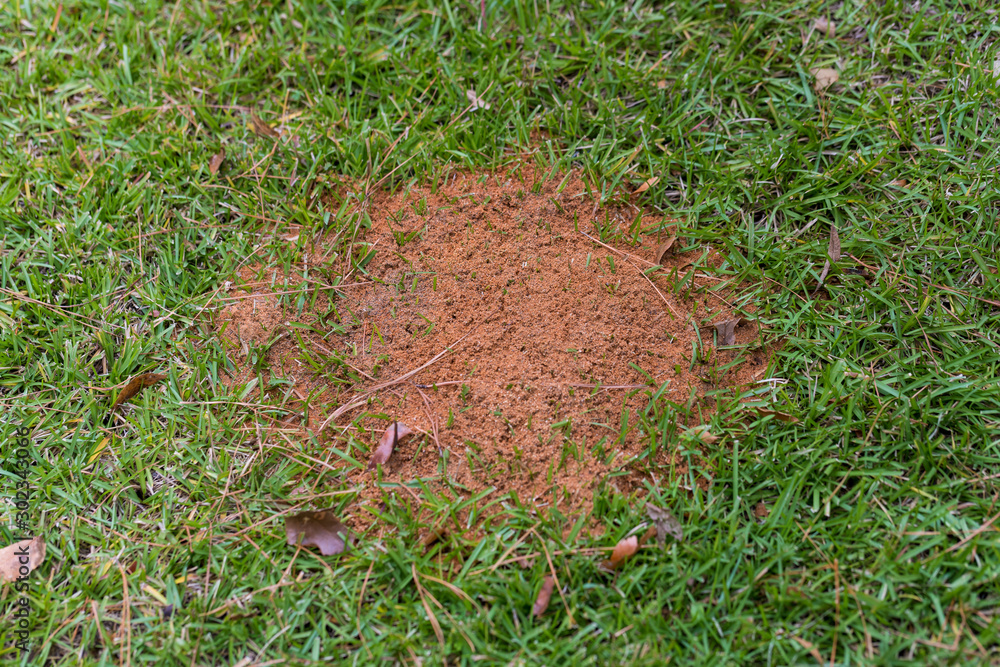
Fire ants build visible mounds, but not all colonies are easy to spot. Some nest under grass, along foundations, beneath mulch, or inside potted plants—making them even more dangerous because they catch you off guard.
What Makes Fire Ants So Dangerous?
Unlike other ant species, fire ants don’t just invade—they defend.
When their mound is disturbed, they swarm aggressively and sting repeatedly. These stings can cause:
- Burning, painful welts
- Itching and irritation that lasts for days
- Allergic reactions in some individuals
- Risk for children and pets playing in the yard
Fire ants build visible mounds, but not all colonies are easy to spot. Some nest under grass, along foundations, beneath mulch, or inside potted plants—making them even more dangerous because they catch you off guard.
Why Fire Ant Infestations Are So Hard to Control
Here’s the challenge: fire ants are built to survive.
A single colony can contain hundreds of thousands of ants, and many have multiple queens. That means even if part of the colony is destroyed, the rest can continue growing—or split off to form new colonies.
DIY treatments often fail because:
- They only treat the surface mound
- They don’t reach the queen(s)
- Colonies relocate when threatened
- Treatments aren’t applied consistently across the yard
Disturbing a mound without properly eliminating it can actually make the problem worse, causing the colony to spread into new areas—including your landscaping and plant containers.
DIY Fire Ant Control: Why It Falls Short
It’s tempting to grab a bag of fire ant killer from the store and handle it yourself. While these products can help temporarily, they rarely solve the problem long-term.
Common DIY approaches include:
- Pouring boiling water on mounds
- Using over-the-counter granules or baits
- Spraying insecticides
- Trying home remedies like vinegar
The issue? These methods often:
- Kill only the ants you see
- Miss deeper parts of the colony
- Fail to eliminate multiple queens
- Require repeated, time-consuming applications
Meanwhile, the ants continue spreading—often into new areas like your flower beds and pots.
The Benefits of Professional Fire Ant Control
If you want to truly eliminate fire ants and keep them from coming back, professional pest control is the most effective solution.
1
Full Yard Treatment (Not Just One Spot)
Professionals don’t just treat visible mounds—they treat your entire yard, including high-risk areas like garden beds and plant pots.
2
Colony Elimination
nstead of surface-level fixes, professional treatments are designed to reach and eliminate the queen(s), stopping the colony at its source.
3
Strategic Baiting and Barrier Protection
Experts use proven methods like targeted baiting systems and perimeter treatments to eliminate active colonies and prevent new ones from forming.
4
Safer, More Effective Solutions
Professional-grade products are more effective than store-bought options and are applied with safety in mind for families, pets, and plants.
5
Ongoing Prevention
Fire ants are persistent, especially in North Carolina’s climate. Routine service ensures your yard stays protected throughout the year.
Why Fire Ant Control Should Include Your Landscaping and Pots
One of the most overlooked aspects of ant control is treating all potential nesting areas.
That includes:
- Decorative planters
- Raised garden beds
- Potted plants on patios and porches
- Mulched areas and flower beds
Without addressing these areas, fire ants can continue to thrive—even if your lawn looks clear. A comprehensive treatment plan ensures no colony is left behind.
What to Expect from a Professional Fire Ant Service
When you hire a professional ant control company, the process is designed to be thorough and long-lasting.
Inspection
A technician evaluates property:
- Lawn and visible mounds
- Landscaping and mulch beds
- Plant pots and containers
- Entry points near your home
Targeted Treatment
Treatments are applied to:
- Eliminate active colonies
- Address hidden nesting areas
- Create a protective barrier
Maintenance
Routine visits help:
- Prevent new colonies
- Monitor activity
- Keep your yard protected
The Importance of Preventative Fire Ant Control
Fire ants don’t go away on their own. In fact, they thrive in warm climates like North Carolina.
Preventative pest control is key because it:
- Stops infestations before they spread
- Reduces the risk of painful stings
- Protects your outdoor living spaces
- Keeps your yard safe for kids and pets
Regular treatments are especially important during peak seasons when fire ant activity is highest.
Take Back Your Yard—and Your Peace of Mind
Your yard should be a place to relax, garden, and spend time with family—not a place you avoid because of fire ants.
If you’re noticing mounds in your lawn, ants in your plant pots, or painful stings when you least expect it, it’s time to take action.
Professional fire ant control doesn’t just treat what you see—it eliminates the problem at its source and helps prevent it from coming back.
Schedule Fire Ant Control Today
If you’re in Clayton, Raleigh, Wendell, or surrounding areas, now is the time to protect your home and yard.
With expert treatment, full-property coverage, and ongoing prevention, you can finally enjoy your outdoor space without worrying about fire ants.
Don’t wait until the next sting—schedule your fire ant control service today and reclaim your yard for good.
Free Pest Inspection